



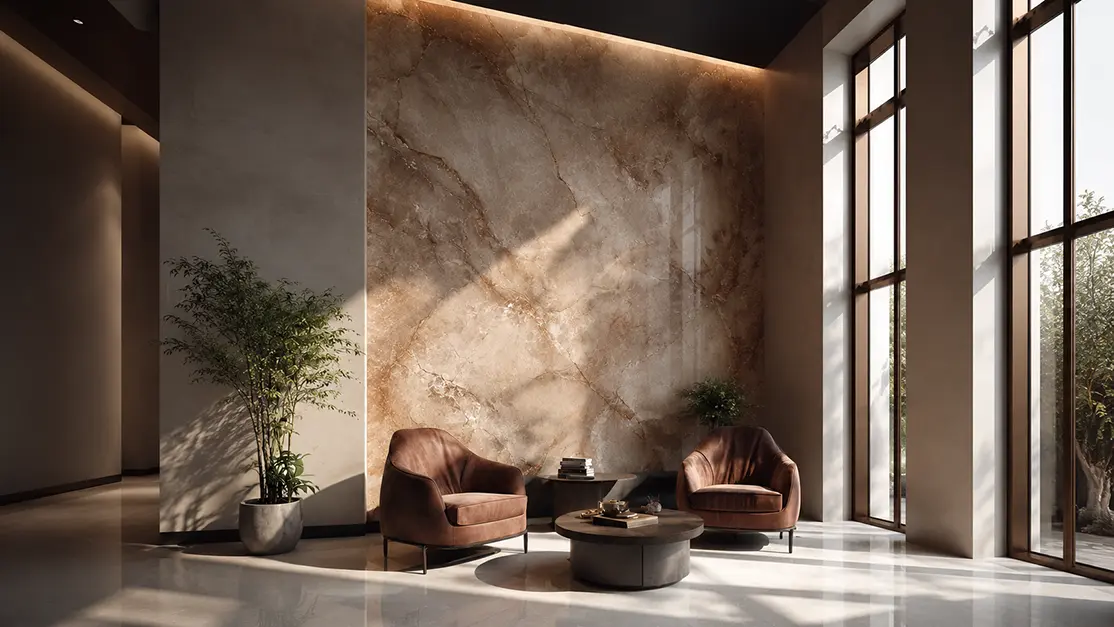
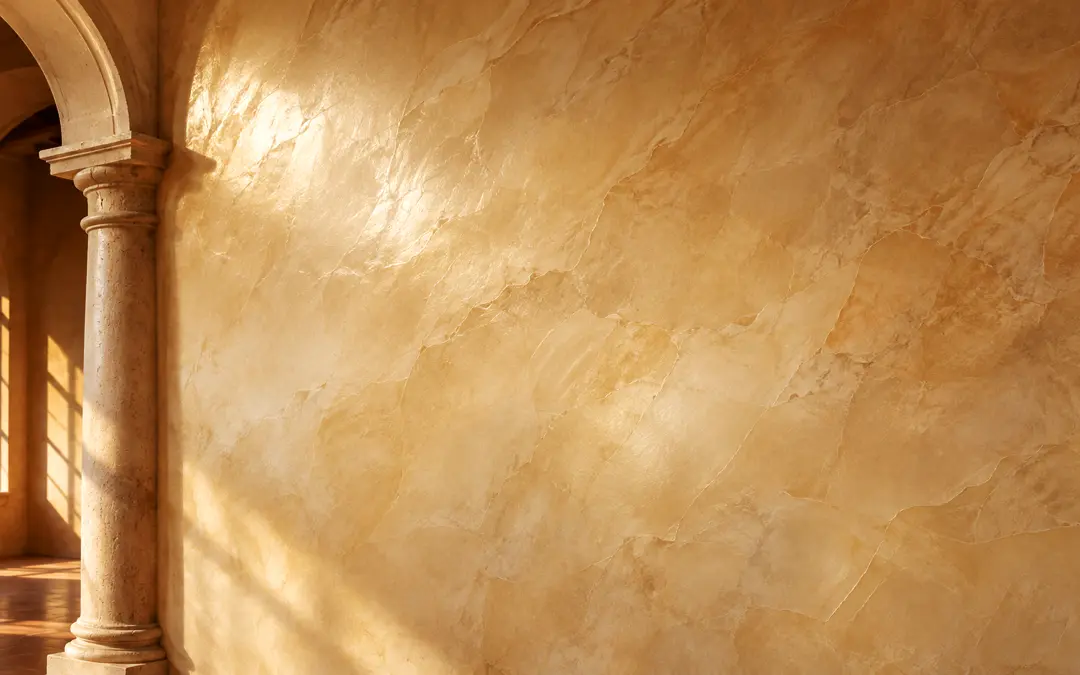
A wall can be more than just a backdrop. With the Italian spachtel technique, it becomes the focal point of a room. Delicate textures, subtle color nuances, and the interplay of light lend the surfaces a special depth. Depending on the finish, the result is either a subtle matte look or an elegant sheen reminiscent of polished natural stone.
What is the Italian trowel technique?
The term encompasses various decorative techniques in which trowel compounds are applied and worked by hand in several thin layers using a Venetian trowel. Well-known variations include Stucco Veneziano and Marmorino. The materials, tool technique, and application process determine how smooth, textured, or glossy the finished surface appears.
What makes these techniques special is the artisanal execution: every movement leaves its own unique mark. This results in a one-of-a-kind wall design with dynamic transitions.
From a subtle sheen to a marble-like appearance
Italian trowel techniques offer a wide range of design possibilities. Light cream, sand, and natural tones create a calming effect and pair well with wood, linen, or natural stone. Bold colors add striking accents and really highlight the surface’s depth. It is essential to ensure that lime-resistant pigments are used.
The level of sheen also influences the room’s overall effect. Matte and subtly shimmering surfaces complement understated interiors. Highly compacted, glossy surfaces lend rooms a stately character. A sample area in the intended room is the best way to see how the wall will actually look.
Historical Roots: From Antiquity to Andrea Palladio
The Italian trowel technique is part of a long tradition of decorative wall design. As early as Roman antiquity, stucco surfaces were used to decorate interiors. This craft continued to influence Italian design well into the Renaissance, where it was further developed. Source: Metropolitan Museum of Art
Andrea Palladio (1508–1580) is closely associated with this architectural tradition. The Renaissance architect also relied on colored stucco surfaces in his buildings. At the Villa Foscari and the Loggia del Capitaniato, for example, he used thin, pigmented layers of stucco as part of the architectural design. His buildings demonstrate how surfaces and colors can consciously shape the impact of architecture. Source: Treccani
Anyone who chooses Italian stucco techniques today is embracing a design tradition that has linked craftsmanship and architecture for centuries. The interplay of light, color, and finely finished surfaces can be just as beautifully translated into modern living spaces.
Where does this technique really shine?
Even a single accent wall can give a room a whole new character. Popular applications include:
- Living room: as an eye-catching feature behind the sofa or as a subtle complement to the furnishings.
- Entrance areas: to create a welcoming first impression.
- Bedrooms: in soft hues for a harmonious atmosphere.
- Business spaces: for a personalized design of reception and consultation areas.
In the bathroom, suitability depends on the system used and the level of wear and tear. A design suitable for direct contact with water is particularly important.Further information can be found in the articles on marble plasters in the bathroom.
Why Careful Workmanship Is Crucial
A stunning finish begins with the substrate. It must be structurally sound and properly prepared. The individual layers are then applied, smoothed, and compacted depending on the desired look. A final protective treatment depends on the material and the intended use.
Experience and a keen sense of touch make all the difference. They determine whether the interplay of color, texture, and sheen creates a harmonious overall look. That’s why it’s worth coordinating the desired effect in advance using samples.
Care with a Sense of Proportion
For cleaning, follow the instructions specific to the material and protective treatment. Often, a soft cloth is sufficient; harsh cleaners and abrasive tools should be avoided. It’s best to determine the appropriate care routine during the planning phase.
Wall Design with Personality
The Italian spatel technique combines traditional craftsmanship with versatile interior design. Whether subtle, modern, or bold: the interplay of color, texture, and light creates surfaces that give a home a personal touch.
Would you like to design your rooms using the Italian trowel technique? Get advice on colors, finishes, and suitable applications—and discover which style suits your home.